Sudan’s Armed Conflict Enters Its Fourth Year
As armed conflict in Sudan enters its fourth year, C4ADS remains committed to supporting our Sudanese partners across civil society working towards a peaceful, civilian-led democratic transition. We aim to inform international efforts for accountability for atrocity crimes and violations of international humanitarian law.
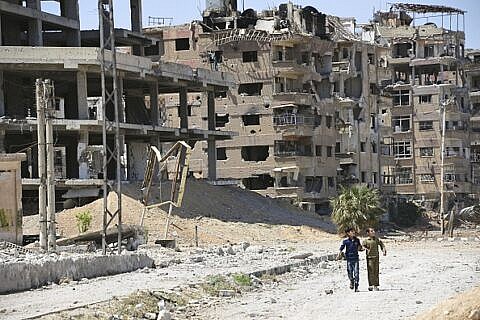
FOR IMMEDIATE RELEASE — On April 15, 2026, armed conflict between the Rapid Support Forces (RSF) and the Sudanese Armed Forces (SAF) entered its fourth year. Since fighting first erupted on this date in 2023, both warring parties have committed acts of indiscriminate violence against civilians, systematic exploitation of Sudan’s national resources, and deliberate obstruction of humanitarian assistance. Sudan now faces the largest displacement crisis in the world, with famine conditions spreading across the country. The human toll of this war continues to mount with no political resolution in sight.
C4ADS has sustained its analytical focus on Sudan throughout this conflict, building on nearly a decade of work aimed at supporting democratic transition and civilian protection. Over the past year, that work expanded across four distinct areas: weapons procurement networks, conflict financing through illicit mining, humanitarian and human rights, and technology-enabled solutions to atrocity documentation and cultural heritage protection.
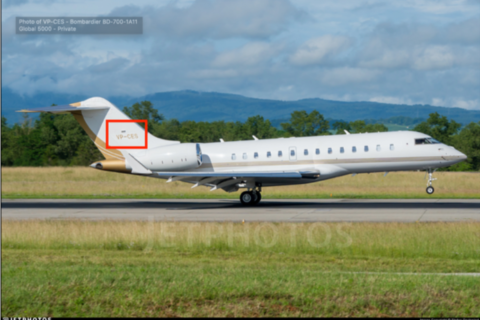
Our Indirect Fire investigation exposed how Sudan’s Defense Industries System and its subsidiaries procure components for indigenous ammunition production, circumventing international sanctions and arms embargoes to sustain the SAF’s military campaign.
C4ADS partnered with France 24 to investigate the alleged use of chlorine as a chemical weapon in Sudan, tracing a supply chain from an Indian manufacturer through a UAE-linked intermediary to Ports Engineering Co. Ltd., a company majority-owned by the sanctioned, SAF-affiliated Giad Industrial Group. By matching cylinder numbers in photographs of dropped barrels to specific trade records, C4ADS analysts assessed that chlorine shipments intended for water treatment were likely diverted and weaponized after export from India. The same analysis identified likely military equipment imported through Ports Engineering from a Turkish defense producer, which C4ADS assessed could violate the UN arms embargo if destined for use in Darfur. The findings provide publicly available evidentiary grounding for the U.S. government’s June 2025 determination that Sudan used chemical weapons, and support C4ADS’ call for enhanced due diligence across dual-use goods supply chains in conflict-affected states.
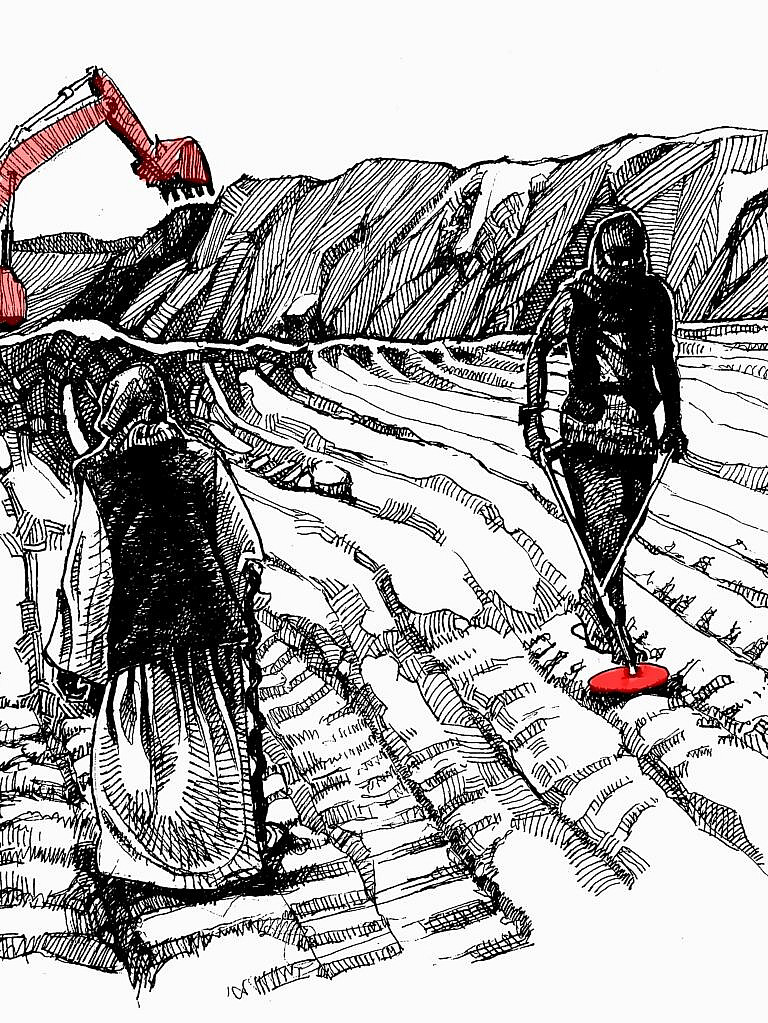
Conflict financing through mineral and gold extraction and processing remained a central focus. Our Bullion for Bullets report identified three under-leveraged intervention points for curtailing conflict mining: precursor chemical imports, gold taxation, and the broader mineral sector, including chrome. In follow-up coverage, Danwatch reported that Maersk had shipped sodium cyanide to Sudamin, a firm affiliated with the warring parties, for gold mining purposes. Maersk subsequently banned Sudamin from its services.
Across all of this work, we have been privileged to partner with a range of Sudanese civil society organizations whose firsthand knowledge and access are indispensable to rigorous, responsible analysis. We partnered with the Adala Center for Research and Studies and the Ayin Network to trace how both the RSF and SAF rely on gold mining and smuggling as primary sources of conflict financing. Together with the Sudan Human Rights Hub, we examined the collapse of the agricultural sector and its role in driving acute food insecurity, in addition to compiling some of the numerous human rights and humanitarian violations spanning more than two years of conflict. Alongside Sudanese Women Rights Action (SUWRA), we documented the systematic destruction of Sudan’s healthcare infrastructure, the closure of civic space and the challenges facing civil society, and the systemic targeting of civilians by both the RSF and SAF.
Technology has also played a growing role in our Sudan work. We have continued to develop and deploy our custom WhatsApp bot for atrocity monitoring, and built a custom documentation tool now in active use by multiple organizations operating inside Sudan. At an early 2025 AI+ Expo hackathon hosted by the Special Competitive Studies Project, we developed a project using AI to identify looted Sudanese antiquities being sold on peer-to-peer marketplaces — a demonstration of how emerging technology can be leveraged to address large-scale harms, including the loss of irreplaceable cultural heritage.
As this conflict continues, C4ADS will remain focused on the illicit financial flows, weapons networks, and conflict enablers that sustain it. Our most important work continues to be the work supporting the civil society organizations, journalists, and partners working toward justice, accountability, and a democratic, civilian-led future for Sudan.
For additional information about our work supporting democracy and human rights in Sudan, please visit the relevant initiative page on our website or reach out to us directly at [email protected]. For any related media inquiries, please email [email protected].